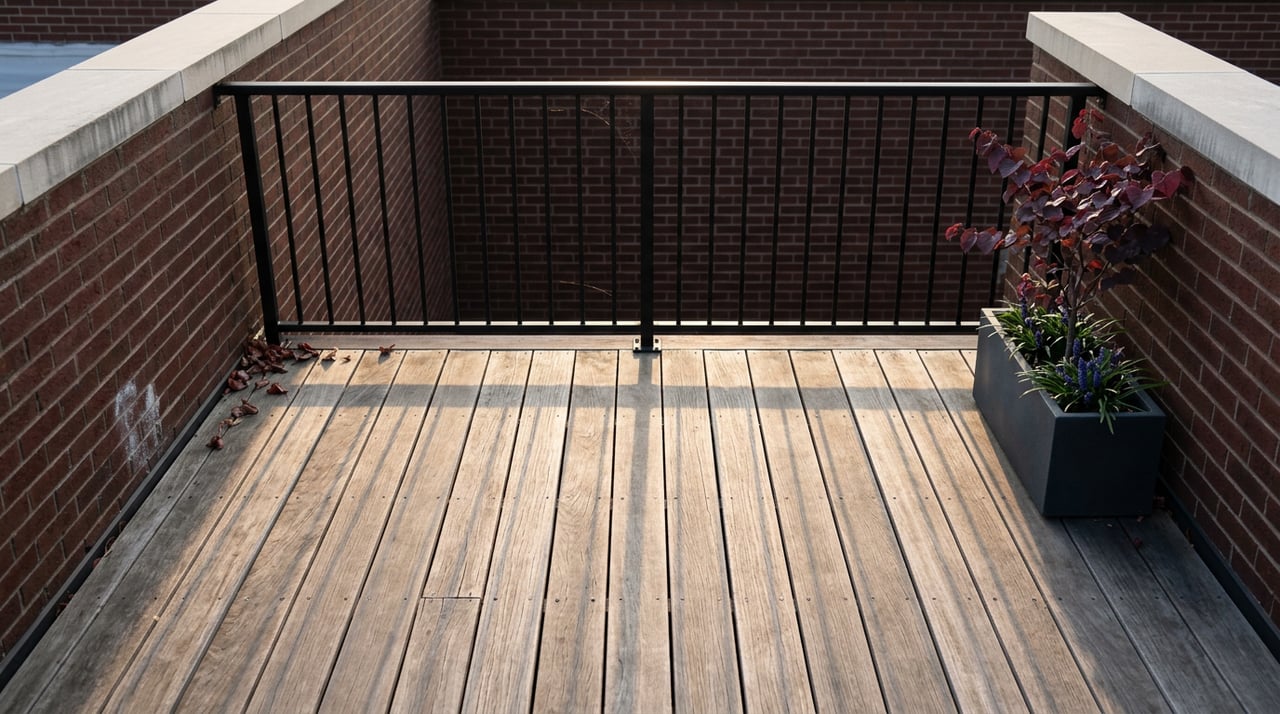
In the fall of 2024, a Beacon Hill resident sued his neighbors over a roof deck. The resident filed suit in Suffolk Superior Court against a couple who owned a historic house. The dispute wasn't over an unpermitted addition. The Beacon Hill Architectural Commission had approved the deck weeks earlier, on August 15, finding its impact would be "de minimis," as Universal Hub reported. The suit named the commission itself as a defendant and argued the approval violated the district's own rule that roof decks visible from a public way are inappropriate.
That case highlights an important consideration for buyers on Beacon Hill. A Certificate of Appropriateness from the commission is not the end of the story. It can be the beginning of one.
The Approval That Doesn't Close the File
Every exterior alteration on Beacon Hill that's visible from a public way is subject to review. That standard is broader than most buyers assume. It covers not just additions and roof decks, but window replacements, shutter colors, signage, HVAC lines, and even repointing mortar. The commission's own guidance defines "public way" expansively enough to include what's visible from the Boston Common, the Public Garden, Storrow Drive, the Charles River Esplanade, and the Longfellow Bridge, which means a change on a rear elevation can still fall under review if it can be seen from any of those vantage points.
The commission meets monthly, on the third Thursday, to hear these applications. Work that proceeds without approval isn't just a paperwork gap. It's a violation subject to fines of up to $1,000 per day under the district's enabling statute. And even approved work carries a shelf life: a Certificate of Appropriateness is valid for two years from the date of the approval letter, after which the project has to go back through review if it hasn't been completed, as the Beacon Hill Times reported.
None of that shows up in a standard home inspection. A structural engineer checking a roof deck's framing has no reason to ask whether the deck was ever approved, or whether that approval is still valid, or whether an abutter has challenged it. That's a records question, not an inspection question, and on Beacon Hill it's one worth asking before an offer goes in.
Why an Approval Can Still Get Contested
The suit turned on a distinction that's easy to miss. The commission's own standards discourage roof decks visible from a public way, and the plaintiffs argued the approved deck at 54 Pinckney Street failed that test despite the commission's finding otherwise. Their complaint cited loss of privacy, increased noise, and diminished property values, the kind of harm that Massachusetts land use law lets a neighbor sue over even after a local board has signed off.
This isn't a hypothetical for Beacon Hill specifically. The Hill's density means abutters share sightlines in ways that make disputes over visibility unusually common, and the commission's own docket shows how often visibility, not just materials or design, decides an outcome. A rebuilt roof deck at 5 Smith Court and a replaced deck at 76 Charles Street both moved through 2026 hearings with conditions tied to keeping railings simple and low profile. For a buyer, the practical lesson is that a deck's approval history matters as much as its existence, and a deck that drew any recorded objection during review is worth understanding before it becomes part of your title.
The Commission Doesn't Only Rule on Additions
It's tempting to think of the Architectural Commission as something that only matters if you're planning a major renovation. The 2026 hearing record says otherwise. In February, the commission unanimously denied without prejudice an ambitious proposal to raze the single-story CVS building at Charles and Cambridge Streets and replace it with a five-story mixed-use structure designed by RODE Architects, sending a signal that even significant new construction faces real scrutiny rather than routine approval. That same hearing approved far smaller changes: a rebranded sign for Blank Street's coffee shop at 282 Cambridge Street, a new blade sign and awnings for Sisley Paris Boutique's incoming shop at 31-33 Charles Street, and carved wood signage for Willie's, a pizzeria replacing the recently closed Upper Crust at 20 Charles Street.
Later hearings in the spring kept the same rhythm. Applications came in for a full repoint at 27 Anderson Street, a window replacement at 37 Beacon Street specified without low-E glass to preserve the historic sightline, and a repainted set of shutters at 13 Louisburg Square matched to an exact Benjamin Moore black. None of these are dramatic. That's the point. The commission's authority reaches into decisions most homeowners elsewhere make without a second thought, from a paint sheen to a window pane, and a buyer who assumes Beacon Hill's exterior rules only apply to additions will be surprised the first time they want to change a shutter color.
What This Means Before You Make an Offer
For a buyer under agreement on a Beacon Hill property, the due diligence period is the moment to ask questions a standard inspection won't raise. A short list worth working through with your attorney or agent:
- Request the property's file from the Beacon Hill Architectural Commission to confirm whether visible exterior features (roof decks, dormers, signage, HVAC equipment, window replacements) received a Certificate of Appropriateness.
- Check the date on any approval. If it's near or past the two-year mark and the work was never completed, the seller's plans may not transfer as-is.
- Ask whether any neighbor formally objected during the review process. Objections are part of the hearing record and a pattern worth knowing about before closing, not after.
- If a roof deck, dormer, or addition is part of what's drawing you to the property, confirm it was built to match its approved plans. A deck rebuilt with different materials or railings than what the commission approved is worth checking.
- If you're planning any exterior change after purchase, from a different shutter color to a new fence, budget time for the process itself. Straightforward requests often move through administrative review between hearings, but anything visible and unusual goes to the full commission on its monthly schedule.
None of this replaces legal advice, and a buyer working through a complex approval history should loop in real estate counsel early rather than late. But knowing the questions to ask is what separates a buyer who understands Beacon Hill from one who's simply drawn to its facades.
Why This Doesn't Diminish the Appeal
None of this is an argument against buying on Beacon Hill. The same review process that occasionally lands a homeowner in litigation is also why the district looks the way it does: the wrought iron on Mount Vernon Street, the shutter colors on Chestnut Street, the brick coursing on Anderson Street all reflect decades of exactly this kind of scrutiny, applied consistently enough that the neighborhood's character has held rather than eroded. The 46 Beacon Street garage door dispute, denied by the commission in 2023 and eventually resolved through a settlement issued in 2025, shows the process working the way it's meant to: slow, occasionally contentious, but ultimately capable of producing an outcome both sides can live with.
What the Pinckney Street case adds is a more precise understanding of where the risk actually sits. It isn't in buying a home with a roof deck. It's in assuming that because a deck exists, its story is finished.
A Few Questions Worth Asking Directly
What is the commission's review focused on? It focuses on exterior features visible from a public way.
What should I do if a previous owner did exterior work without approval? Check the property's records before closing; knowing the approval history matters here more than in most Boston neighborhoods.
How long does a typical application take? Routine maintenance and minor changes often move through administrative review between the monthly hearings. Anything with visible design implications, from a new deck to a facade change, goes before the full commission at its regular third-Thursday meeting, and complex cases can take multiple hearings to resolve.
Beacon Hill rewards buyers who do their homework in both directions, the architectural and the procedural. If you're evaluating a property on the Hill and want a clear read on what its approval history actually says, William Montero has spent decades working through exactly these details on behalf of Boston's most discerning buyers and sellers. Let's Connect.
This article is general information, not legal, tax or financial advice. Consult a qualified professional about your situation.
