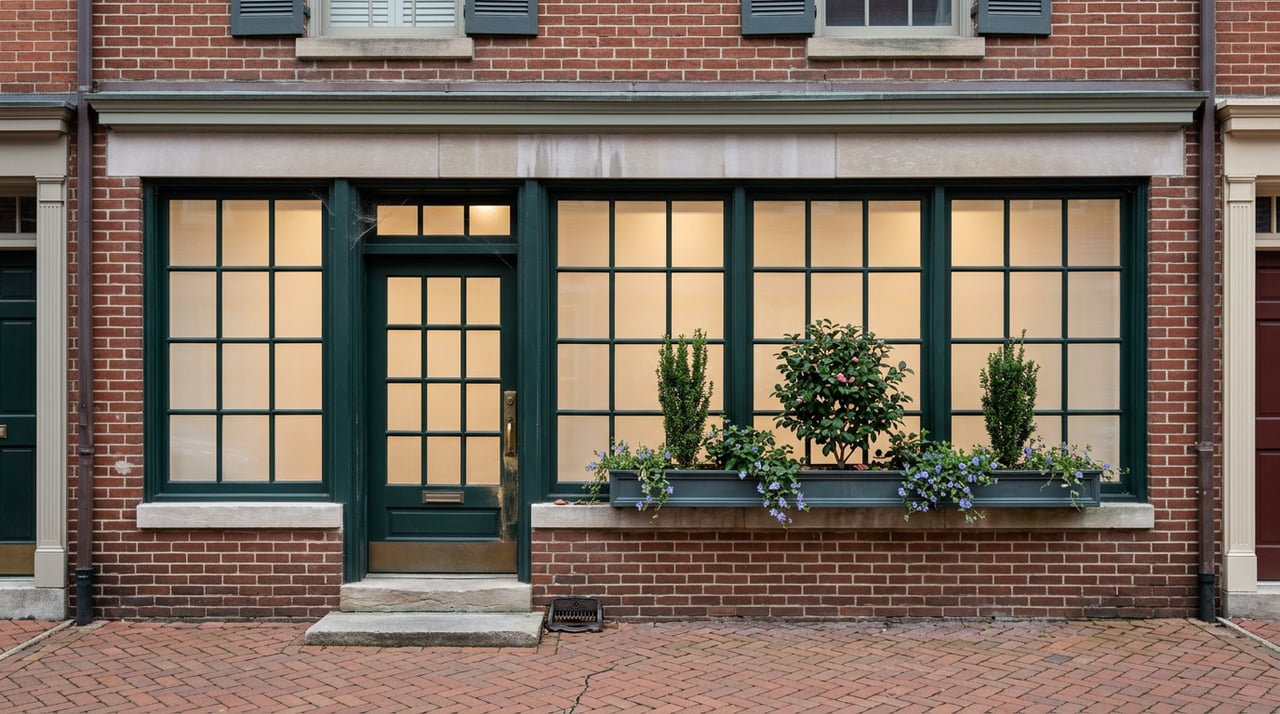
Walk from Charles Circle toward the Public Garden this month and the block looks, at first glance, like it always has. Brick facades, gas lamps, the specific hush of a street built for people rather than cars. But stop at the corner of Charles and Chestnut and look both ways. On one side, sheets of brown paper covered the windows of the old Beacon Hill Hotel earlier this year while the Beacon Hill Architectural Commission sorted through the building's future. Diagonally across the street, in the space last occupied by Benefit Cosmetics Boutique and Brow Bar, a French skincare house had been aiming to move in by June. Between those two storefronts sits most of what has actually happened on Charles Street this year, and it is not the story of a street losing its character or landing one hot new restaurant. It is the story of a street splitting into two different streets that happen to share a sidewalk.
The Gap Panificio and Figs Left Behind
For a while, Charles Street's everyday dining options thinned out one closure at a time. Panificio, the longtime sandwich counter, and Figs, the pizza and Italian spot near the top of the block, both closed in recent seasons, and Hoodline reported that the Beacon Hill Times had cited both departures, with locals missing the kind of place you duck into on a Tuesday, not the kind you save for a birthday. That distinction matters more than it sounds like it should. A street can have plenty of good restaurants and still be missing somewhere to eat on a weeknight.
BCB3 Hospitality, the group behind pintxo bar Zurito, read the gap the same way. Chef Jamie Bissonnette, together with partners Andy Cartin and Babak Bina, opened Willie's at 20 Charles Street on March 12, right next door to Zurito, with a menu built around thin-crust pizza, housemade pasta, and small plates designed to travel well for delivery. The dishes lean further than the Italian-American label suggests: rigatoni amatriciana gets a gochujang edge, bottarga and yuzu kosho show up on the pasta list, and the burrata arrives with buchu muchim, a Korean garlic chive salad borrowed from sibling restaurant Somaek. Bissonnette described the whole approach to Boston Magazine simply as a chance to
"let our food freak flag fly."
The two restaurants share more than a wall. Bina has described the Zurito and Willie's pairing as a version of the "side-by-side concept" the group already runs downtown, where a guest without a table at one restaurant waits with a drink at the other. It is a small operational detail, but it tells you the group planned for exactly the kind of crowd that shows up when a street has been short on casual seats for a while.
What a Pizza Counter Actually Proves
Here is the detail that matters more than the menu. Willie's seats 28 people and has no separate waiting area, and by April the Boston Globe was reporting that most weeknight tables were booked out roughly two weeks in advance, with reservations opening at exactly 10 a.m. on a schedule tight enough that regulars set alarms for it. A neighborhood pizza place that requires that kind of planning is not evidence of a casual dining scene bouncing back easily. It is evidence of how empty that tier of the street had actually become. When one 28-seat room absorbs the demand that two or three closed storefronts used to spread across a full block, the shortfall Panificio and Figs left behind was larger than a couple of vacant leases.
The Other Half of the Street
Willie's offers an everyday dining option on the street, while a different kind of venture was taking shape a few doors down. In the former home of Artu, a new speakeasy called 89 Charles opened without any exterior signage at all, just a staircase leading to a candlelit, subterranean room built for date nights rather than takeout orders. Its cocktail list leans playful, including a drink named for the Kowloon Restaurant in Saugus, and the whole concept depends on people not stumbling in by accident.
Layer the retail side on top and the second track becomes clearer. Sisley Paris, the French skincare house, had been aiming to take over the old Benefit Cosmetics space at 31-33 Charles Street by June, a plan laid out at a Beacon Hill Architectural Commission hearing in January when the company's operations manager, Jean-Raphaël Comte, walked the commission through a dispute over temporary window decals on the storefront glass. Around the same time, Nantasket Sweets by Swedes, a Swedish candy shop that started on Hull's Nantasket Beach, announced its own new storefront on Charles Street, moving a seaside specialty business into the city for the first time.
None of these three ventures, the unmarked speakeasy, the planned French skincare maison, or the candy shop, replace what Panificio, Figs, or the Beacon Hill Hotel used to provide. They are not solving the Tuesday-night problem. They are giving residents a different reason to walk down Charles Street: an occasion, a gift, a night out, rather than a routine. Willie's is the one new arrival offering the kind of everyday dining that had been missing. Everything else is raising the ceiling on specialty retail and destination dining, and that leaves residents holding two different versions of the same street in their heads depending on the day.
What Didn't Move
Not every storefront on Charles Street is part of this churn, and the ones that stayed put explain why the block still feels coherent despite the turnover. Gary Drug Co. at 59 Charles Street has served the neighborhood since 1934, long enough to outlast several generations of restaurant concepts on either side of it. The Beacon Hill Business Association still runs its Summer Sidewalk Sale each June, a fixture that predates every business named above. And the Beacon Hill Civic Association held its 104th annual meeting this past May at the Liberty Hotel, a building that carries its own version of the neighborhood's story: it was the Charles Street Jail before it became one of Boston's more recognizable hotels. Representative Jay Livingstone, Councilor Sharon Durkan, and Senator Lydia Edwards were all in attendance, a reminder that the street's civic infrastructure runs on the same handful of people year after year, regardless of who is leasing the storefronts.
Some of those same people are running the new storefronts too. The owner of Rugg Road Paper Company and Paws, both on Charles Street, was recognized at that same 104th meeting for her work with the Beacon Hill Business Association and the neighborhood's ongoing cleanup efforts. One owner running two storefronts while sitting on the association that organizes the sidewalk sale is exactly the kind of overlap that keeps a street with this much tenant turnover from actually feeling turned over.
A Street That Split in Two
If you live on Beacon Hill, the practical read on this year is not that Charles Street got better or worse. It got more specific. The block now answers a different question depending on what you need. For a weeknight dinner, Willie's earned its two-week wait by being the only real answer to a genuine shortage. For an evening built around an occasion, 89 Charles and the incoming Sisley boutique are answering a question nobody on the street had been asking in years, simply because there was no unmarked cocktail room or French skincare maison there to ask it of. Both things are true on the same two hundred yards of brick sidewalk, and this is the first year in a while where that split is this visible.
The version of Charles Street that gets photographed for tourists, the gas lamps and the cobblestones, has not moved an inch. What changed sits behind those brick facades, in what kind of business can actually survive there now and who it is built for on any given night.
For residents thinking about what any of this means for their own address on the Hill, from a Mount Vernon Street townhouse to a Charles Street pied-à-terre, William Montero has spent more than three decades reading these shifts block by block. Let's Connect.
