In March 2025, a single parking space at the Brimmer Street Garage came on the market for $750,000. Nine feet by eighteen. No walls, no windows, no address of its own beyond a unit number in a valet garage a block off Storrow Drive. The listing agent, Rene Rodriguez of Cabot & Company, told reporters the spot had sold for $500,000 just two years earlier and $300,000 in 2013. Before that, in 1979 when the garage first opened, the same square footage went for $7,500.
That trajectory is not a curiosity. It is the clearest evidence available that parking on Beacon Hill behaves like its own real estate market, one that trades separately from the homes it serves, appreciates on its own schedule, and almost never shows up honestly in the number a buyer thinks they are paying.
The Deed That Says a Dollar
Here is the part that catches people off guard during a transaction, not before it. When a Beacon Hill home with a deeded parking space changes hands, the parking unit is frequently recorded as a separate transfer for a token sum, often exactly one dollar. The Boston Globe reported Rodriguez's explanation: when sellers record the sale of the house, they also record the sale of the parking as a fully separate deed, and it typically goes down as a dollar. The real value never appears in that filing.
For a buyer or an agent trying to comp two similar Beacon Hill units, one with parking and one without, this creates a genuine problem. Public sale records will show two nearly identical transactions at nearly identical prices, with no visible line item explaining why one buyer also drives away with an appreciating six-figure asset. The parking value is baked into the headline sale price of the home, but the deed does not reveal the separate parking value. You cannot reverse-engineer what you paid for the spot from the paperwork. You have to ask before you sign anything.
How a Slab of Concrete Became Its Own Asset Class
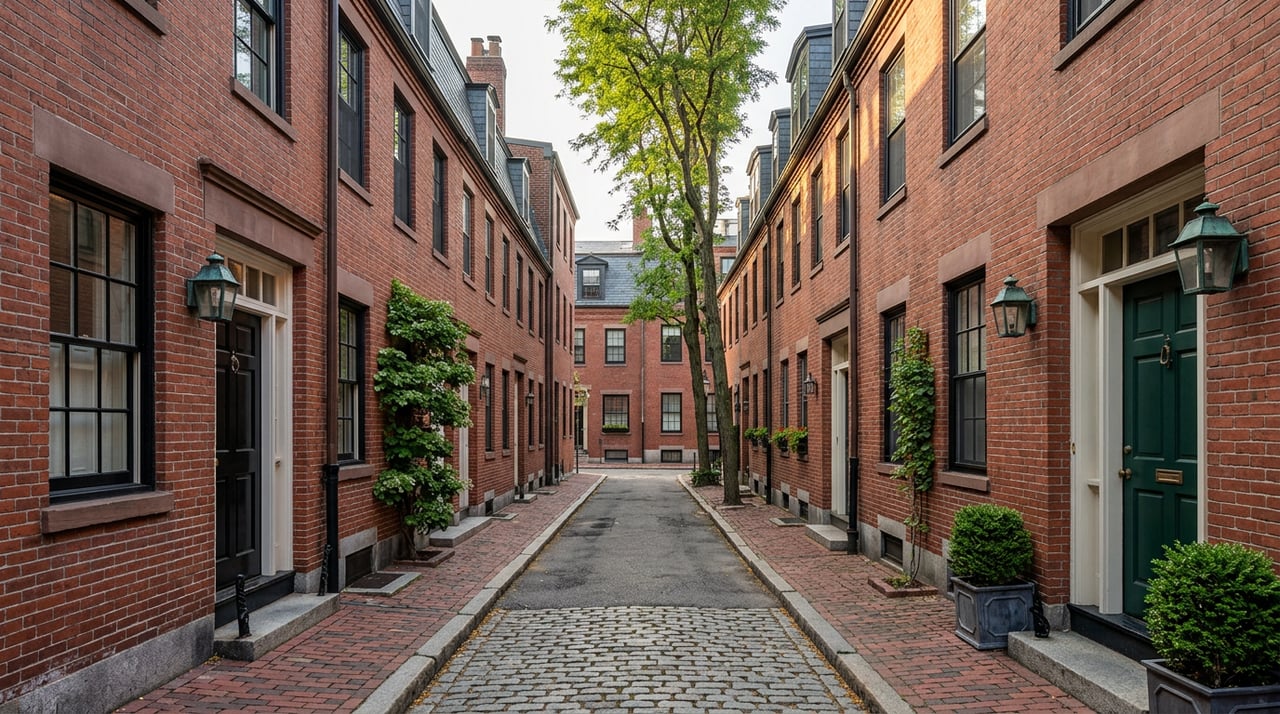
The reason parking commands this kind of money traces back to how Beacon Hill was built. The streets were laid out in the late 18th and 19th centuries for foot traffic, horses, and carriages, long before anyone needed to store a car. There is no meaningful way to add off-street parking to a neighborhood like this now. The garages that exist are the garages that will ever exist.
That scarcity shows up directly in price history at Brimmer Street:
| Year | Approximate spot price |
|---|---|
| 1979 | $7,500 |
| 2013 | $300,000 |
| 2023 | $500,000 |
| 2025 (listed) | $750,000 |
The Boston Globe reported Rodriguez's explanation that no more parking would be built on the Hill. A home without a spot can gain value from having one attached, and that value is not likely to come back down, because the supply side of this particular market is permanently closed.
The Costs That Come With Owning the Spot
Buying into that appreciation means buying into its carrying costs too. Fortune reported that a deeded parking unit at Brimmer Street carries roughly $400 a month in association fees, about $291 in property tax, and homeowner's insurance running near $238, all for a piece of property with no walls and no living space attached to it. Add that up and a single parking spot can generate more than $10,000 a year in fixed costs before anyone drives a car into it.
This matters for how a buyer should think about total cost of ownership on Beacon Hill. A condo's monthly fee tells you what it costs to own the unit. It rarely tells you what it costs to own the parking that came with it, because parking can carry costs of its own. Two buyers looking at "comparable" carrying costs on paper can be looking at very different real numbers once the parking unit's bills are added in.
Deeded, Rented, or Permit Only: Three Different Bets
Not every parking arrangement on Beacon Hill is the same, and the language on a listing sheet is doing real work if you read it closely.
- Deeded parking in buildings like Brimmer Street has a documented history of appreciating faster than almost anything else in the neighborhood.
- Rented parking means a monthly lease in a nearby garage. It is convenience without the asset.
- Resident permit parking is not parking at all in the deeded sense. Permits are issued free by the City of Boston,
Reading the Median Price With This in Mind
Beacon Hill's median sale price for the three months ending in May 2026 was $1.3 million, up 8.4 percent from the same period the year before, with homes selling in a median of 37 days. Earlier in the year, price per square foot averaged around $1,445, making Beacon Hill the fourth most expensive neighborhood in Boston for condos, trailing only the Seaport, Back Bay, and Downtown.
Neither of those figures tells you whether the unit came with a parking space, and if it did, whether that space added $350,000 or added nothing because it was a rented monthly lease that will not survive a change in building management. Two condos can post the same price per square foot and represent two entirely different financial positions once you account for what does or does not come with a place to keep a car. This is the piece of the market that a median cannot show you and that most buyers do not think to ask about until an offer is already on the table.
There is a flip side worth sitting with too. A unit with no parking attached is not automatically a worse deal. For a buyer who does not own a car, or who is comfortable with the neighborhood's walkability and proximity to the T, a listing without deeded parking can represent a real, if quiet, discount relative to a comparable unit carrying a six-figure parking asset. Knowing which is which, and pricing your offer accordingly, is the entire game.
Before You Write an Offer
A few questions are worth asking before you get attached to a listing:
Confirm whether the parking is its own deeded unit with its own parcel number, or whether it is bundled loosely into the residential listing without a separate legal description. Ask to see that unit's own condo documents, including its fee history, insurance requirements, and any resale restrictions Walk the actual route from the garage to the front door. A deeded spot two blocks away in a different building is a different daily experience than one in your own basement, and the gap tends to show up the first time it snows. And if the seller's parking solution is a resident permit rather than a deed, factor that distinction into your evaluation.
A Few Direct Questions
Does a home without deeded parking on Beacon Hill sell for less than a comparable one with it? Not necessarily on paper, but the difference is usually embedded in the sale price rather than disclosed separately.
Is a Beacon Hill parking spot a reasonable long-term hold on its own? The Brimmer Street price history suggests sustained appreciation, and the underlying scarcity that drives it is structural rather than cyclical. That said, its carrying costs matter regardless of whether it appreciates, and it should be evaluated with the same care as any other real estate purchase.
Parking is rarely the reason someone falls for a Beacon Hill address. But it is very often the detail that decides what the address actually costs, and it deserves the same scrutiny buyers give the home itself. For a closer look at what else defines the neighborhood beyond the listing sheet, the Beacon Hill neighborhood guide is a useful next stop.
If you are weighing a purchase on the Hill and want a clear-eyed read on what a specific listing's parking situation actually means for your offer, William Montero has spent decades pricing exactly these details. Let's Connect.
This article is general information, not legal, tax or financial advice. Consult a qualified professional about your situation.
