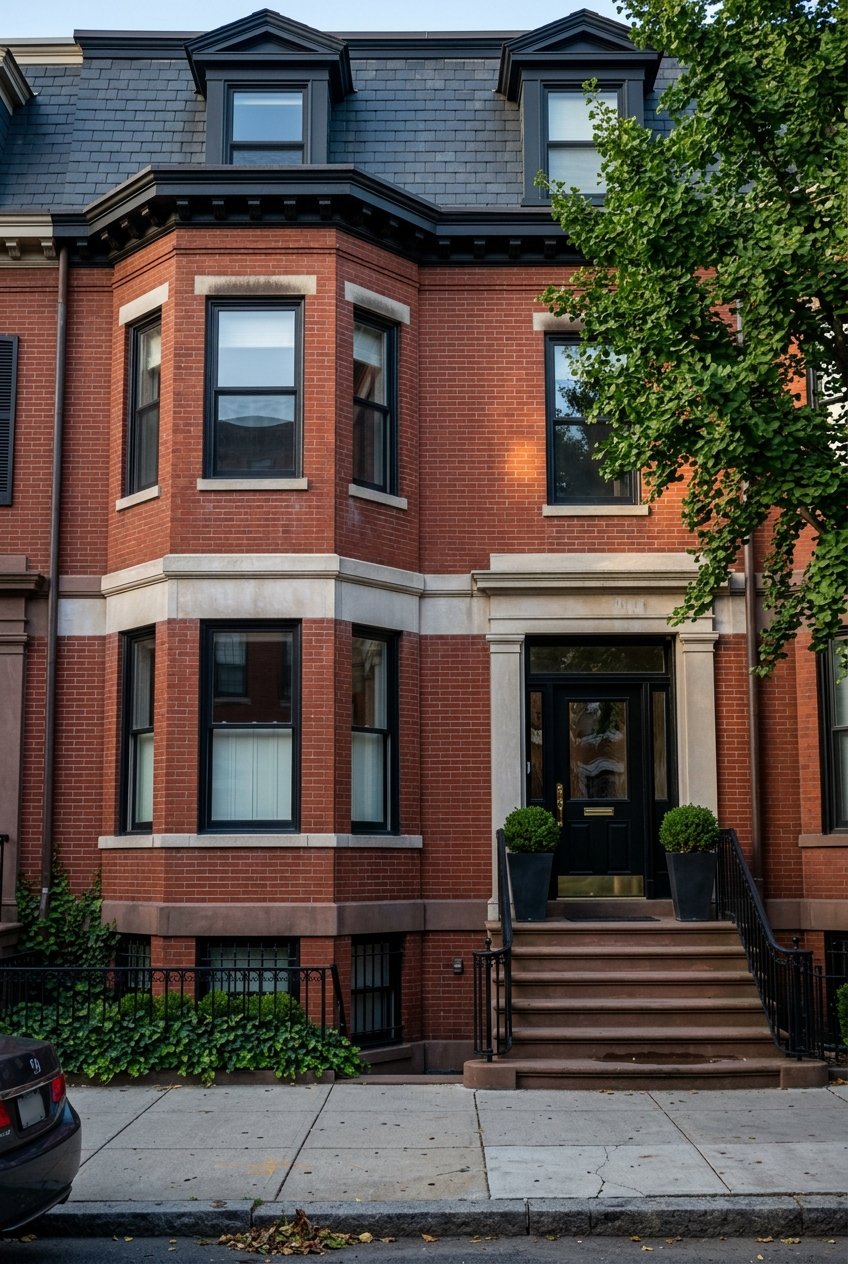
If you want a Boston address that feels polished the moment you step outside, Back Bay is hard to ignore. This is a neighborhood where historic architecture, daily convenience, and cultural landmarks all meet within a compact, walkable setting. If you are weighing a move here, understanding how Back Bay actually lives day to day can help you decide whether its version of luxury fits your life. Let’s dive in.
What Makes Back Bay Distinct
Back Bay stands apart because its appeal is woven into the neighborhood itself. According to the City of Boston’s Back Bay neighborhood overview, it is a protected historic district along the Charles River, next to Downtown and the Public Garden, and much of it was created on filled tidal marshes in the mid-1800s.
That history still shapes the experience of living here. Victorian row houses, brick sidewalks, and a Paris-inspired street layout give Back Bay a visual consistency that feels rare in a major city. The neighborhood’s luxury is not only about square footage or privacy. It is also about architecture, preservation, and the ease of having so much within reach.
Daily Life in Back Bay
For many residents, the biggest draw is how efficient daily life can feel. You can move from coffee to appointments to shopping to dinner without covering much distance, which is a major part of the neighborhood’s everyday appeal.
Newbury Street and Boylston Street
Boston Planning describes Newbury Street as Back Bay’s main lifestyle corridor, known for international retailers, salons, boutique offices, and restaurants. Nearby Boylston Street, St. James Street, and Huntington Avenue add more retail, hotels, restaurants, and office buildings.
That mix gives you options throughout the day. Whether you are running errands, meeting a client, or heading out for dinner, the neighborhood supports a lifestyle where convenience and atmosphere sit side by side. The city’s seasonal Open Newbury Street program also reinforces that pedestrian-friendly feel by closing the street to cars during select events.
Prudential Center Convenience
The Prudential Center adds another layer of convenience in the center of the neighborhood. Its official site describes it as a 3.6-million-square-foot urban center with 680,000 square feet of retail and more than 70,000 daily visitors.
For residents, that scale matters in practical ways. Dining, shopping, fitness, and everyday errands can happen in one place, and the center is connected to the Green Line, Orange Line, Commuter Rail, and bus system. It also includes a large enclosed parking garage, which can be useful in a dense urban neighborhood where street parking is limited.
Culture Is Part of the Lifestyle
Back Bay is not just convenient. It also places you close to some of Boston’s best-known civic and cultural landmarks, which adds depth to daily life.
Copley Square Anchors
Copley Square serves as one of the neighborhood’s main gathering points. The Boston Public Library’s Central Library sits at 700 Boylston Street, and the library notes that it was the first large free municipal library in the United States and now holds a collection of more than 23 million items.
Nearby, Trinity Church has been part of Copley Square since 1877 and welcomes visitors throughout the year. The city also completed an $18.9 million renovation of Copley Square Park focused on accessibility, pathways, lighting, shaded seating, and flexible event space. Together, these landmarks give the neighborhood a civic presence that is hard to replicate.
Charles River Esplanade Access
Back Bay also benefits from immediate access to the Charles River Esplanade. The City of Boston identifies the Esplanade as a Boston Landmark and part of the 17-mile Charles River Reservation.
That means your city life can include riverfront walks, bike rides, concerts, festivals, and outdoor recreation without leaving the neighborhood. Boston Planning also notes the role of the Hatch Shell and the Paul Dudley White Bicycle Path, which strengthen Back Bay’s connection to the outdoors. It is a meaningful counterbalance to the density and energy of the city blocks nearby.
Getting Around Without a Car
One of Back Bay’s strongest advantages is connectivity. If you value a walkable, car-light lifestyle, the neighborhood is unusually well positioned.
The Boston Public Library notes that its Copley Square location is close to Copley station on the Green Line and Back Bay station on the Orange Line and Commuter Rail, with multiple bus routes nearby. Amtrak’s Back Bay station also provides regional rail connections, along with BlueBikes and on-site bike parking.
The Prudential Center adds more transit access through the Green Line, Orange Line, Commuter Rail, and bus system. For many residents, this network makes it realistic to rely less on a car while still moving easily around Boston and beyond.
The Tradeoffs to Understand
Back Bay offers a refined urban lifestyle, but it also asks you to embrace the realities that come with a dense historic neighborhood. For the right buyer, those tradeoffs are well worth it. Still, it helps to know what to expect.
Parking and Practical Constraints
The Boston Public Library notes that street parking in Back Bay is limited, with paid garage parking available at nearby hotels and shopping centers. If you are coming from a setting where parking is simple and abundant, this is an adjustment.
That does not make the neighborhood less desirable. It simply means Back Bay tends to work best for people who prioritize walkability, location, and access over suburban-style parking convenience.
Historic District Oversight
Back Bay’s historic character is protected for a reason. The Back Bay Architectural District requires review of exterior changes before work begins.
For many buyers, that oversight is part of the value. It helps preserve the visual integrity that makes the neighborhood so recognizable. At the same time, it can limit how freely an owner can alter a building’s exterior, which is important to understand before you buy.
Who Back Bay Often Appeals To
Back Bay is especially compelling if you want a polished urban setting with architecture, culture, and convenience built into daily life. The neighborhood tends to suit buyers who value proximity, service, and a strong sense of place.
Boston Planning’s demographic profile notes that 87.3% of residents age 25 and older have a bachelor’s degree or higher, and 42% of residents are between ages 20 and 34. While those figures do not define any one buyer, they do suggest a neighborhood with a strong professional and urban orientation.
In practical terms, Back Bay often resonates with buyers seeking a luxury condominium, penthouse, or architecturally significant residence in the center of Boston. It can also appeal to downsizers who want lock-and-leave convenience without giving up a high-quality setting.
Why Back Bay Remains a Flagship Boston Address
Back Bay continues to hold its place as one of Boston’s most established luxury neighborhoods because it compresses so much into one historic district. You get protected architecture, destination retail, major civic institutions, riverfront recreation, and strong transit access within a remarkably small footprint.
That combination creates a form of everyday luxury that feels both elevated and livable. It is not isolated or ornamental. It is built into the neighborhood’s streets, landmarks, and rhythm of life.
If you are considering a move to Back Bay, the right guidance matters, especially when inventory, building differences, and long-term value are all part of the decision. To discuss Back Bay homes, luxury condominiums, or architecturally significant properties in Boston, connect with William Montero.
FAQs
What is daily life like when living in Back Bay Boston?
- Daily life in Back Bay centers on walkability, with easy access to Newbury Street, Boylston Street, Prudential Center, Copley Square, and the Charles River Esplanade for errands, dining, culture, and recreation.
What makes Back Bay different from other Boston neighborhoods?
- Back Bay stands out for its protected historic architecture, Victorian row houses, brick sidewalks, central location, and dense mix of residential, civic, retail, and cultural destinations.
Is Back Bay Boston convenient for public transportation?
- Yes. Back Bay is served by Copley station on the Green Line, Back Bay station on the Orange Line and Commuter Rail, multiple bus routes, and regional rail access through Amtrak.
What should buyers know about parking in Back Bay?
- Buyers should know that street parking is limited in Back Bay, and many residents rely on nearby garage parking or choose the neighborhood because a car-light lifestyle is realistic.
Are there historic district rules for Back Bay properties?
- Yes. Exterior changes within the Back Bay Architectural District are subject to review, which helps preserve the neighborhood’s architectural character.
Who is living in Back Bay a good fit for?
- Back Bay often suits buyers who value walkability, architectural character, cultural access, luxury condominiums, and a refined urban lifestyle in the center of Boston.
